Van's RV Series (Experimental) Checklist
A free, printable Van's RV Series (Experimental) checklist — 22 sections from Customize This For Your Aircraft First to Carburetor Ice, free to edit, sized for a kneeboard.
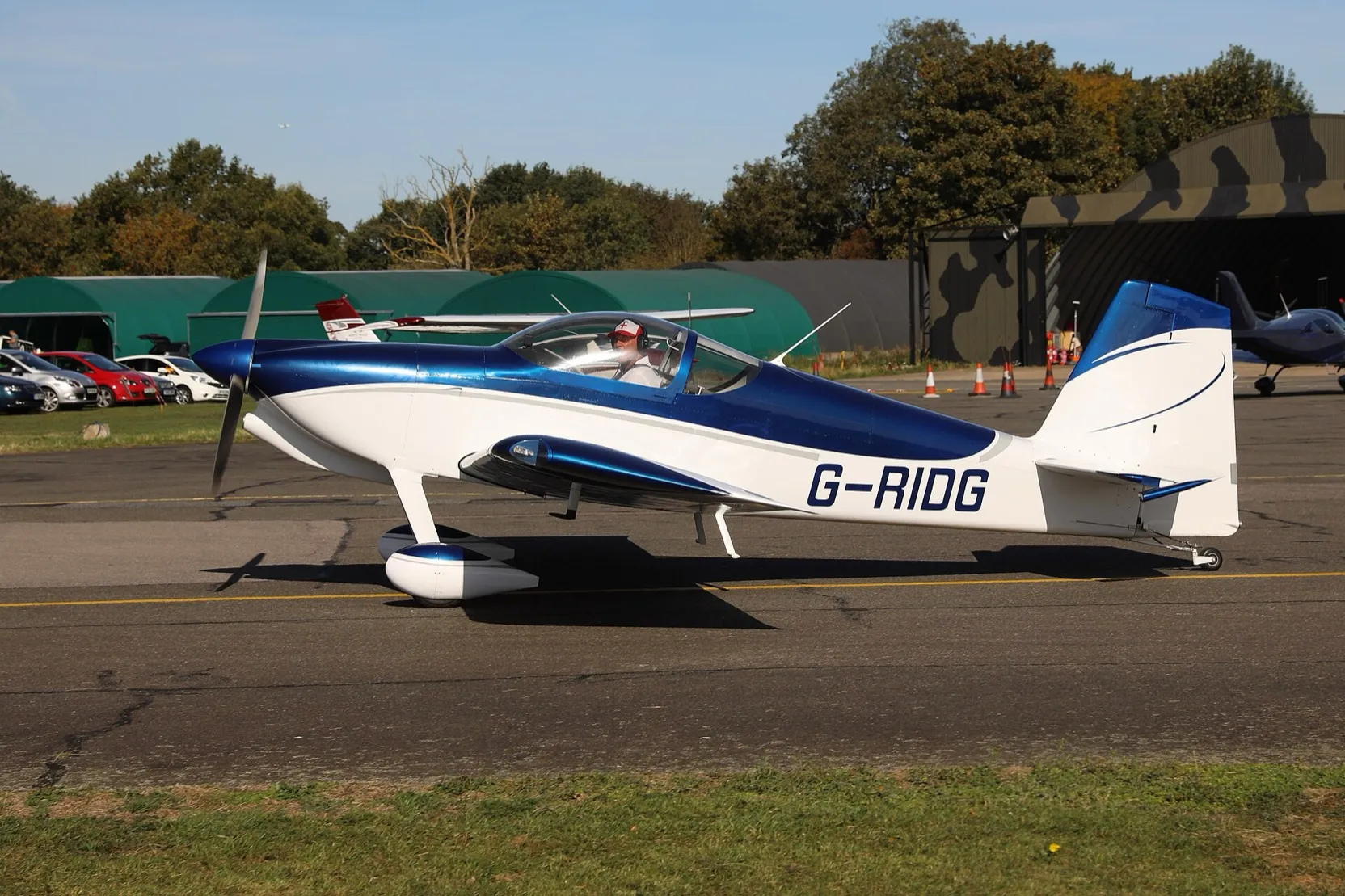
What the Van’s RV series is
The Van’s RV line (often written Vans RV) is a family of Experimental / Amateur-Built kits, not one type: no FAA-approved factory POH, just the handbook the builder wrote and validated in Phase I testing. Two airplanes badged “RV-7” can differ in engine (O-320, O-360, IO-360, IO-390), carbureted or injected, fixed-pitch or constant-speed, glass or steam gauges, tip-up or slider canopy. This experimental aircraft checklist template is built on the two-seat RV-7 / RV-7A with an O-360 or IO-360, and flags where the four-seat RV-10 diverges: IO-540 up front, side-hinged doors instead of a canopy. RV-9 and RV-9A builders can fly the same flow off their own numbers. It’s a flight checklist, not a condition inspection checklist.
I don’t own an RV, and this is the one template where your airplane might be nothing like the one I researched. I built it as a conservative skeleton around the RV-7 family, but your builder made choices I can’t see from here. Print it to PDF, add your N-number, then treat every line as a question for your builder POH.
Normal procedures
Preflight through shutdown, phase by phase, plus V-speed tables for the RV-7 / RV-7A and the RV-10; the block list is below. It opens with a customize-for-your-build section, since induction, prop, ignition, and panel change the checklist content, not just the speeds. Two killer items: the canopy or door latch, confirmed locked by hand rather than by sound, and the LEFT / RIGHT / OFF fuel selector, which has no BOTH position and makes tank switching an active job.
Emergency procedures
A conservative skeleton, memory items in bold: engine failure on the takeoff roll, after takeoff, and in flight with a restart attempt, then engine fire, electrical fire and smoke, an alternator abnormal, and carb ice for carbureted builds. No turn-back-after-takeoff altitude is printed; that number moves with the airframe and your proficiency, so work it out with an instructor. Dual electronic-ignition builds get checked per the manufacturer’s procedure, not a magneto-style drop.
Verify it against your POH
More of this checklist says “confirm for your build” than any other template here, since there is no factory book. Settle each against your builder POH and a CFI.
- Vno for the RV-7 / RV-7A. Only Vne, Vfe, Vso, Vs, Vx, and Vy were confirmed against a builder POH; Vno is flagged.
- A turn-back altitude, if it should be a number at all. Airframe- and proficiency-dependent, not standardized. The checklist prints none.
- Post-flight fuel selector position. Leaving a tank on versus setting OFF varies by fuel-system design; the checklist says “per your POH.”
- RV-10 door mechanism. Single- versus multi-point latch and any warning indication were not confirmed in detail.
- Electronic-ignition run-up. Pull the actual check for your EI system.
- Carbureted RV-10 branch. Fuel-injected is the default; carb-heat items are marked “carbureted only” throughout.
Why not just print a static PDF?
- It's free with no caps — build, edit, save, and print as many as you want.
- You can add your own tail number and logo, so the checklist matches your airplane.
- Every page size is here — half-letter, A5, letter, and folding trifold or 2-up.
A PDF from the internet doesn't know your tail number, your panel, or your instructor's habits. Build your own in the time it takes to read this page — still free.
What's inside
- Customize This For Your Aircraft First
- Preflight Inspection
- Before Start
- Engine Start
- Before Taxi & Taxi
- Run-up & Before Takeoff
- Takeoff
- Climb
- Cruise
- Descent
- Before Landing
- After Landing
- Shutdown & Securing
- V-Speeds (RV-7 / RV-7A, typical)
- V-Speeds (RV-10, typical)
- EmergencyEngine Failure on Takeoff Roll
- Engine Failure After Takeoff (Low Altitude)
- Engine Failure in Flight (Altitude Available)
- Engine Fire in Flight
- Electrical Fire / Smoke in Cockpit
- Alternator / Electrical Failure (Abnormal)
- Carburetor Ice (Carbureted Builds Only)
Questions pilots ask
- Is there a printable Van's RV emergency checklist here?
- Yes, as a conservative skeleton. The emergency section covers engine failure on the takeoff roll, engine failure after takeoff, engine failure in flight with a restart attempt, engine fire, electrical fire / smoke, an alternator/electrical abnormal, and a carburetor-ice flow for carbureted builds, with the memory items in bold. Because every RV is Experimental with a builder-written handbook, treat each flow as a starting question for your own POH, not an approved procedure — and settle the turn-back-after-takeoff altitude with your instructor.
- What speeds are in the Van's RV checklist?
- The checklist carries two V-speed tables, one RV-7 / RV-7A-typical and one RV-10-typical. Vne, Vfe, Vso, Vs, Vx, and Vy were confirmed against a specific builder POH; Vno for the RV-7 was not independently confirmed and is left flagged. Because these are Experimental aircraft validated in Phase I testing, get every number from your own builder POH.
- What is the difference between an RV-7 and an RV-10?
- Seats and mission. The RV-7 / RV-7A is a two-seat side-by-side sport airplane, typically an O-360 or IO-360 under a tip-up or slider canopy; the RV-10 is a four-seat traveler on an IO-540 with side-hinged doors. The procedures diverge with the hardware, not just the numbers — the canopy latch check on a 7 is not the door check on a 10, and the bigger engine changes power settings and fuel handling — which is why this checklist carries a separate V-speed table for each. Both are Experimental, so both land on the same caveat: your builder's POH is the only authority for your airplane.
- There's no BOTH fuel position — how do I manage fuel?
- Most RV fuel selectors are LEFT, RIGHT, or OFF with no BOTH position, which surprises pilots coming from Cessnas. You actively switch tanks in cruise on a routine and confirm the engine keeps running on the new tank before trusting it. Running a tank dry causes pump cavitation that switching to "both" cannot fix, because there is no such setting, and a wrong-tank selection is a known accident cause across the RV fleet. The checklist repeats the fuel selector at preflight, before start, run-up, cruise, before landing, and shutdown.
- Why is so much of this checklist marked "customize" or "confirm"?
- Because it would be dishonest to hand you fixed numbers for an airplane that doesn't have a single fixed configuration. Induction (carbureted vs. injected), fuel selector, canopy or doors, prop type, ignition, and panel all change the actual content of the checklist, not just the speeds. The checklist front-loads those build choices so you fix them once, then work through a flow that matches your airplane.
- Does the canopy really need its own check?
- Yes. Canopy and door security is a recurring safety theme in the RV fleet, and in-flight canopy departures are a known issue. The tip-up or slider canopy on an RV-7/7A latches differently from the side-hinged doors on an RV-10, so the check is not interchangeable. The checklist treats the latch as a killer item and asks you to physically confirm it locked rather than judge by sound or feel.
Related aircraft
.jpg)
New to checklists? Read our guide to building an aircraft checklist →
Need the official numbers? Van's RV Series (Experimental) POH & manuals →