Cessna 172 Skyhawk Checklist
A free, printable Cessna 172 Skyhawk checklist — 19 sections from Preflight Inspection to Alternator / Low-Voltage, free to edit, sized for a kneeboard.
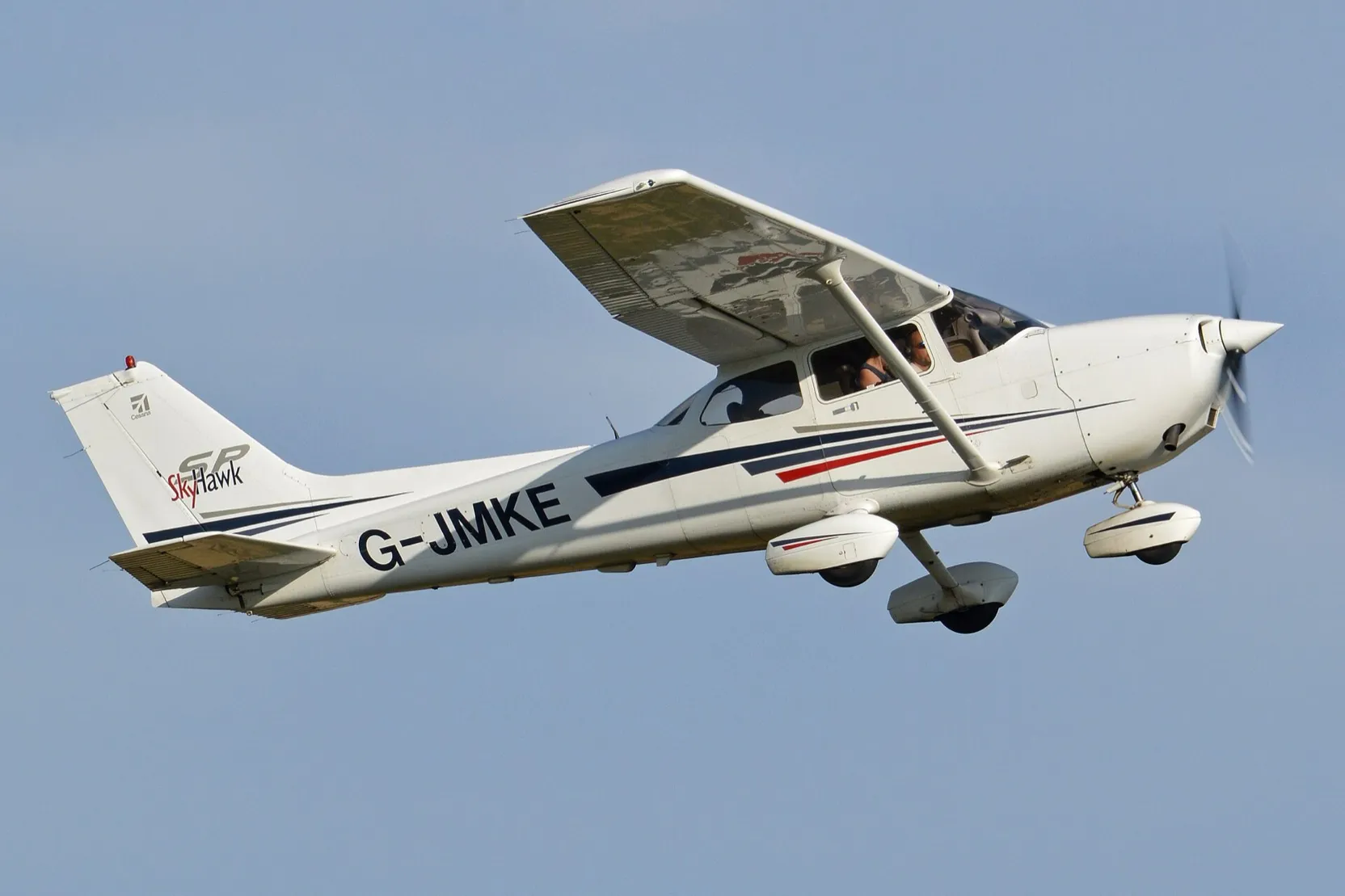
What the Cessna 172 Skyhawk is
The most-produced airplane in history: four seats, one engine, high wing, built continuously since 1956. Two families still fly. The carbureted 172M/N/P of the 1970s and 80s run a 150 to 160 hp Lycoming O-320 with a float carburetor and carb heat. The 172R and 180 hp 172S Skyhawk SP are fuel-injected IO-360s with no carb heat, which changes the start flow. Panels run from steam gauges to the G1000. This checklist is built on the 172R/S; carbureted M/N/P pilots should pull start and carb-heat steps from that POH.
I did most of my early training in a 172S at KLVK, so this is the checklist I know best. I kept it to what I actually run: fuel-injected start, no carb heat, four fuel drains. Print it, add your tail number, and fly your own POH numbers.
Normal procedures
The checklist runs in order, cabin-first preflight and walkaround through shutdown and securing, with separate short/soft-field takeoff notes and a 172S-typical V-speed table at the end (rotate, climb, glide, approach). What a generic “Cessna” printout drops: the fuel-injected start sequence (mixture, throttle crack, aux pump prime, no carb heat to check), all four fuel drains, and the fact that a 172R/S has no carb-heat line. Print the C172 checklist for your kneeboard, or keep the PDF on a tablet.
Emergency procedures
Memory items print in bold, separate from the read-and-verify steps. Covered: engine failure on the takeoff roll; engine failure after takeoff at low altitude (best glide, land straight ahead within about 30 degrees, no turn-back below roughly 1,000 feet AGL); engine failure in flight with a restart attempt and a forced-landing branch; engine fire; electrical fire; and a low-voltage/alternator abnormal handled as monitor-and-manage, not a reflex. It is a conservative training aid, so brief it with your instructor and check it against your approved POH.
Verify it against your POH
Six items vary by model, serial, or operator:
- V-speeds on carbureted M/N/P. The table is the source-confirmed 172S set; lower-powered models have different weights and numbers.
- Best-glide speed. Carbureted 172s are commonly cited near 65 KIAS, but it moves with weight.
- “Controls free and correct.” Before taxi, at run-up, or both. Put it where your instructor puts it.
- Stall-warning horn check. Master ON, lift the vane, listen. Treat it as an operator supplement unless your POH lists it.
- “Increase airspeed to blow out the fire.” Common in training material, not confirmed in a primary 172 POH excerpt.
- Short/soft-field flaps (10° vs 0°). From POH-derived training material, not verified against a specific 172S POH page.
Why not just print a static PDF?
- It's free with no caps — build, edit, save, and print as many as you want.
- You can add your own tail number and logo, so the checklist matches your airplane.
- Every page size is here — half-letter, A5, letter, and folding trifold or 2-up.
A PDF from the internet doesn't know your tail number, your panel, or your instructor's habits. Build your own in the time it takes to read this page — still free.
What's inside
- Preflight Inspection
- Before Start
- Engine Start (Fuel-Injected)
- Before Taxi & Taxi
- Run-up & Before Takeoff
- Takeoff
- Climb
- Cruise
- Descent
- Before Landing
- After Landing
- Shutdown & Securing
- V-Speeds (172S, typical)
- EmergencyEngine Failure on Takeoff Roll
- Engine Failure After Takeoff (Low Altitude)
- Engine Failure in Flight (Altitude Available)
- Engine Fire in Flight
- Electrical Fire in Flight
- Alternator / Low-Voltage (Abnormal)
Questions pilots ask
- Is there a printable Cessna 172 emergency checklist here?
- Yes. The emergency section covers engine failure on the takeoff roll, engine failure after takeoff (land straight ahead, no turn-back at low altitude), engine failure in flight with a restart attempt, engine fire, electrical fire, and a low-voltage/alternator abnormal — with the memory items called out in bold. It is a conservative training aid, not a manufacturer document, so verify every step against your aircraft's approved POH before you rely on it.
- What are the V-speeds for a Cessna 172?
- The checklist carries a 172S-typical V-speed table (rotate, best rate of climb Vy, best angle Vx, best glide, approach, and flap-limit speeds) so the numbers sit on the same page as the procedures. The lower-powered carbureted M/N/P models have lower gross weights and slightly different numbers, so if you fly one of those, pull the speeds from that model's own POH rather than trusting this table.
- Is this checklist official?
- No. It is an original, plain-language compilation of widely published procedure steps, not a manufacturer document. Your aircraft's approved POH/AFM is the authority. Use this as a memory aid you build from the POH, not as a replacement for it.
- My 172 has a carburetor — can I use this?
- Not as-is. This template is built for the fuel-injected 172R/S. Carbureted M/N/P models have a carb-heat control and a different priming and start flow, and mixing the two is a real error. Start from this checklist, then delete the fuel-pump start steps and add your carb-heat items from your model's POH.
- How many fuel drains does a 172 have?
- Four: the left and right wing-tank sumps, the fuel-selector-valve sump, and the gascolator strainer under the engine cowl. The checklist lists all four — draining only the wing tanks misses two.
Related aircraft
.jpg)
New to checklists? Read our guide to building an aircraft checklist →
Need the official numbers? Cessna 172 Skyhawk POH & manuals →