Diamond DA40 Diamond Star Checklist
A free, printable Diamond DA40 Diamond Star checklist — 22 sections from Preflight Inspection to Type-Specific Abnormals, free to edit, sized for a kneeboard.
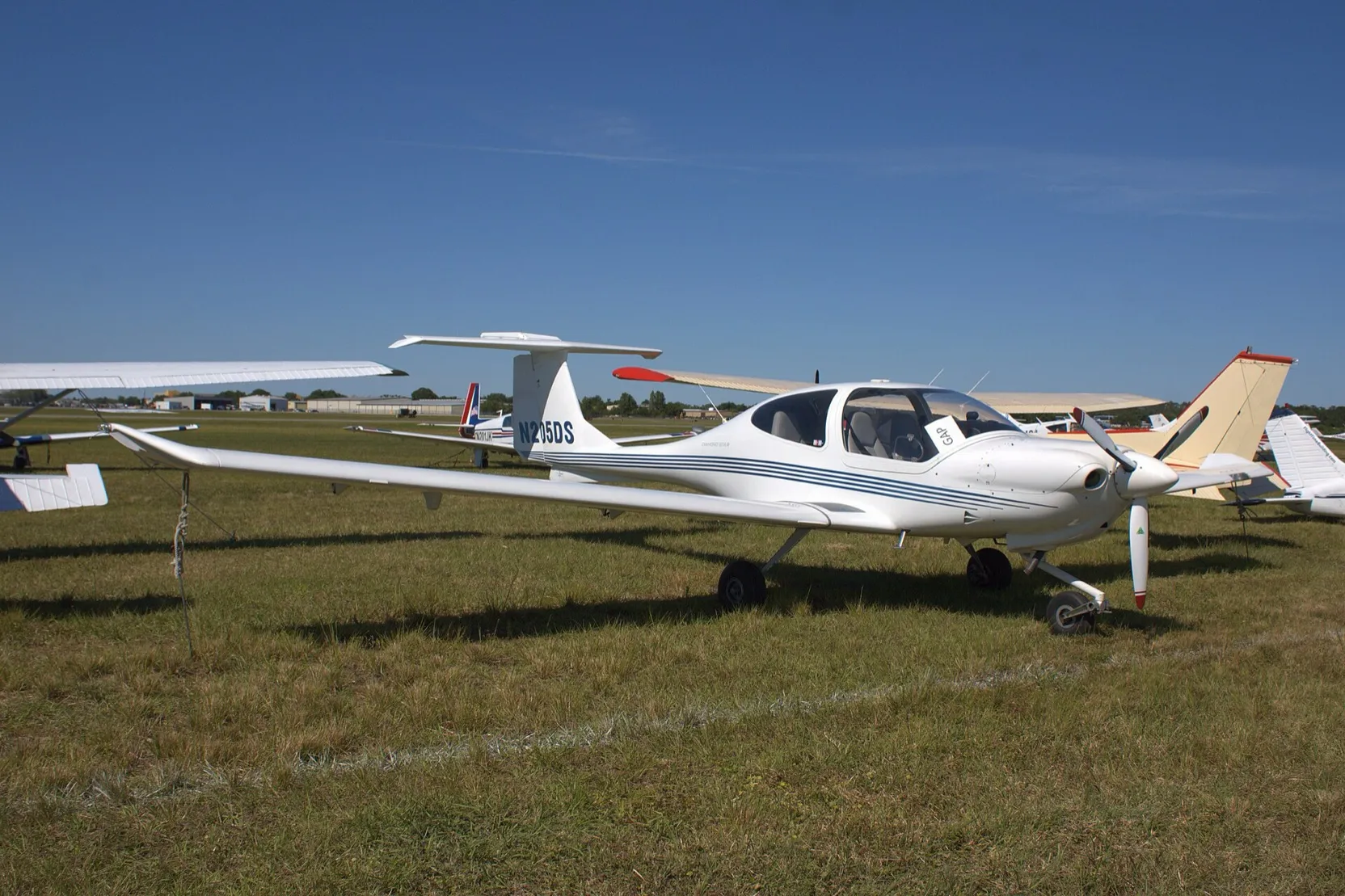
What the Diamond DA40 Diamond Star is
Four seats, one engine, low wing, fixed gear, and a glass-composite airframe instead of aluminum, which is where the long tapered wings and the bubble canopy come from. Around since 2000, mostly at university flight programs, and a steady G1000 platform for instrument students. This checklist covers the Lycoming line: the DA40-180 plus the XL, XLS, and CS, all with the fuel-injected 180 hp Lycoming IO-360, 100LL, and a constant-speed prop. Do not use it for the diesel DA40 NG, which runs an Austro turbodiesel on Jet-A through a single FADEC power lever with no mixture and no prop control. Coming from a Cessna, three things change on day one: the fuel selector reads LEFT, RIGHT, OFF with no BOTH, an “alternate air” induction door stands in for carb heat, and there are three fuel drains instead of two.
The DA40 is what I point people at when they want something modern and honest to fly. I built this checklist around the Lycoming DA40-180 because that is what most schools rent, and I kept the no-BOTH fuel selector, the alternate-air door, and the canopy latches up front, because those are what catch Cessna pilots. Print it, add your tail number, and fly the numbers in your own POH.
Normal procedures
Preflight and walkaround through shutdown and securing in the usual order, plus a table of DA40 V-speeds. Three type-specific items ride up front: actively balancing the LEFT and RIGHT tanks within the imbalance limit, the alternate-air door, and the canopy and rear-door latch checks. The start flow also has you confirm the opposite tank actually feeds.
Emergency procedures
Memory items are in bold. Engine failure on the roll, after takeoff, and in flight with a restart attempt; a power-off landing when nothing restarts; engine fire; electrical fire or smoke; alternator and total electrical failure; plus three DA40 abnormals (door or canopy open in flight, unintentional icing, a defective main tire). The engine-fire flow follows the sourced operator checklists, which defer fuel and ignition cutoff until landing is assured, so nothing in it is marked as a memory item. Built from operator checklists, not the AFM, so walk the steps and the memory items past a CFI with your POH open.
Verify it against your POH
These vary by variant, serial, and source. Check them before you fly the checklist:
- Lycoming line, not the diesel NG. Every fuel, mixture, and alternate-air step assumes the injected IO-360; the NG’s FADEC lever changes all of it.
- Engine-fire sequencing. Sources defer fuel and ignition cutoff until landing is assured. Confirm your type’s sequence and its memory items with a CFI.
- V-speeds, Vx especially. The table is DA40-180-representative; the two sources differ (2015 mass-banded versus 2024 single-figure). Vx appeared in only one, and Diamond’s own table left it blank.
- Max fuel imbalance. Roughly 10 USG standard tanks, 8 USG long-range, per the sourced operator checklist.
- No short/soft-field procedure. None turned up as standard for the type, so none is invented here.
- Gear/flap aural warning quirk. Pilot forum only, not in any document. Anecdotal.
- XL / XLS / CS. Treated as the DA40-180 baseline; three-blade prop handling and PowerFlow-exhaust leaning effects were not researched.
Why not just print a static PDF?
- It's free with no caps — build, edit, save, and print as many as you want.
- You can add your own tail number and logo, so the checklist matches your airplane.
- Every page size is here — half-letter, A5, letter, and folding trifold or 2-up.
A PDF from the internet doesn't know your tail number, your panel, or your instructor's habits. Build your own in the time it takes to read this page — still free.
What's inside
- Preflight Inspection
- Before Start
- Engine Start
- Before Taxi & Taxi
- Run-up & Before Takeoff
- Takeoff
- Climb
- Cruise
- Descent
- Before Landing
- After Landing
- Shutdown & Securing
- V-Speeds (DA40-180, typical)
- EmergencyEngine Failure on Takeoff Roll
- Engine Failure After Takeoff (Low Altitude)
- Engine Failure / Rough Engine in Flight (Altitude Available)
- Power-Off / Emergency Landing (No Restart)
- Engine Fire in Flight / After Takeoff
- Electrical Fire / Smoke in Flight
- Alternator / Electrical Failure (Abnormal)
- Total Electrical Failure (Abnormal)
- Type-Specific Abnormals
Questions pilots ask
- Is there a printable Diamond DA40 emergency checklist here?
- Yes. The emergency section covers engine failure on the takeoff roll, engine failure after takeoff, engine failure / rough engine in flight with a restart attempt, a power-off emergency landing, engine fire, electrical fire / smoke, alternator and total-electrical failures, and DA40 type-specific abnormals (a door/canopy open in flight, unintentional icing, landing with a defective main tire). The memory items are in bold; verify every step against your POH.
- What speeds are in the Diamond DA40 checklist?
- The checklist carries DA40 V-speeds representative of the Lycoming DA40-180 and the XL/XLS/CS variants (rotate, climb, best glide, approach and flap-limit speeds); the diesel DA40 NG is a different airplane and is not covered. Vx appeared in only one source and Diamond's own table left that cell blank, so confirm the published Vx (or its absence) and reconcile the whole table against your specific serial's POH — a 2015 mass-banded set and a 2024 single-figure set differ.
- What is the difference between the DA40 and DA40 NG?
- The engine, and everything downstream of it. The DA40-180 and the XL/XLS/CS run the fuel-injected 180 hp Lycoming IO-360 on 100LL, with a mixture control and a separate prop lever; the DA40 NG runs the Austro AE300 turbodiesel on Jet-A behind a single FADEC power lever, with no mixture and no prop control. That rewrites the start and shutdown flows and it changes fuel planning too, since Jet-A weighs more per gallon than 100LL and the diesel burns less of it. This template covers the Lycoming DA40 only — if you fly the NG, build your checklist from its own POH.
- There's no BOTH on the fuel selector — how do I manage fuel in a DA40?
- That is the single biggest habit change coming from a Cessna. The DA40 selector is LEFT, RIGHT, or OFF, so you actively choose a tank and switch periodically to keep the fuel balanced within the aircraft's imbalance limit. The checklist repeats the fuel selector at before start, run-up, descent, and before landing, and reminds you to confirm the opposite tank actually feeds during the start flow.
- Where's the carb heat? I don't see it on the checklist.
- There isn't one. The DA40's fuel-injected IO-360 has no carburetor, so there is no carb-heat control. Instead it has an "alternate air" induction door for induction or impact icing — a similar concern with a different control and failure mode. You will see "alternate air" where a Cessna checklist would say "carb heat."
- Does the DA40 have a parachute like a Cirrus?
- No. The DA40 has no airframe parachute system and no CAPS handle, so there is no parachute-deployment procedure on this checklist. It also has fixed tricycle gear, so there is no gear-up landing risk and no gear-malfunction checklist.
Related aircraft
_(4-13-2024).jpg)
New to checklists? Read our guide to building an aircraft checklist →
Need the official numbers? Diamond DA40 Diamond Star POH & manuals →