Rotax 912-Class Light-Sport (LSA) Checklist
A free, printable Rotax 912-Class Light-Sport (LSA) checklist — 20 sections from Preflight Inspection to Carburetor Ice, free to edit, sized for a kneeboard.
What a Rotax 912-class LSA is
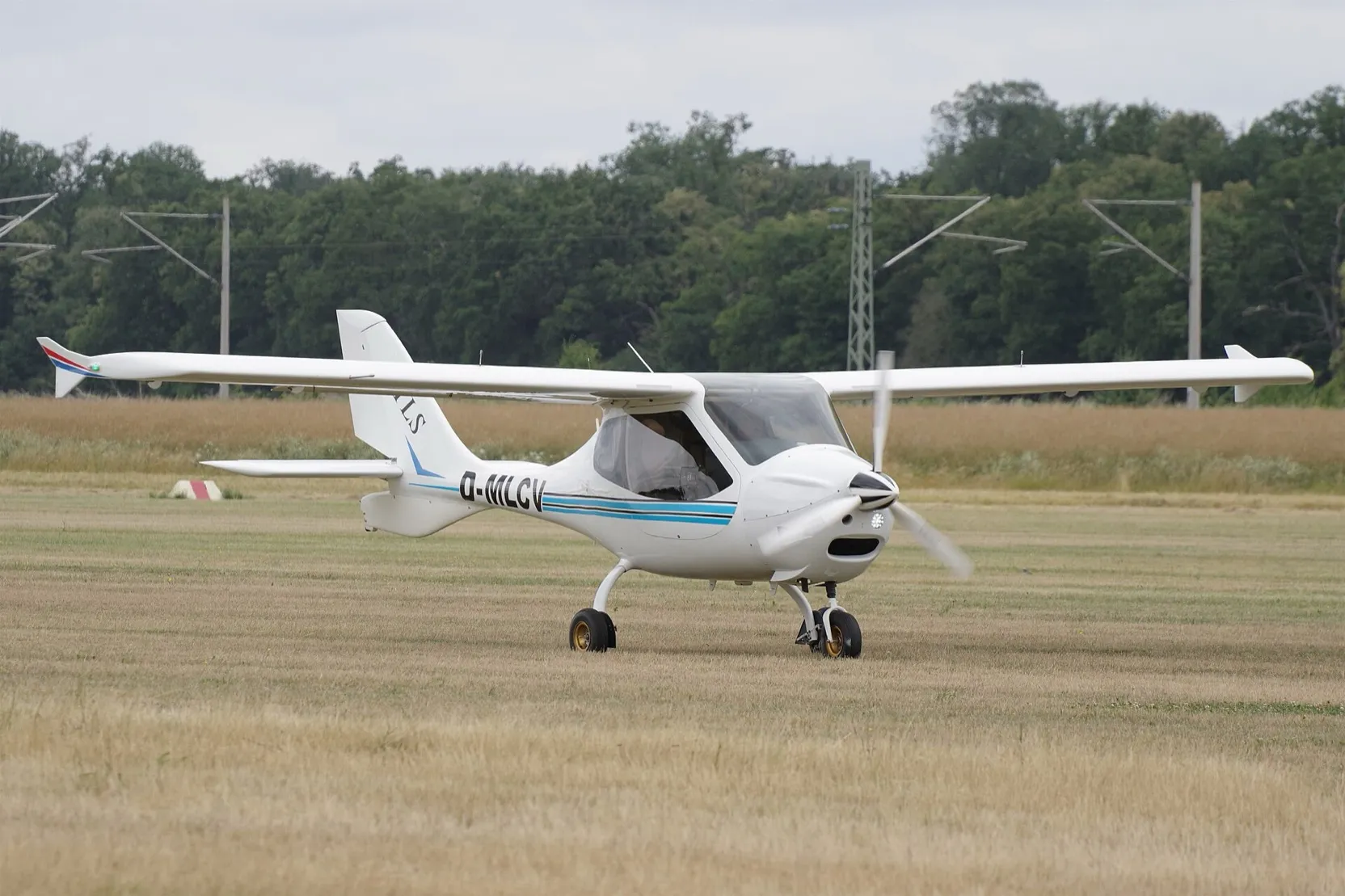
There is no single Rotax 912 airplane. It is a family of two-seat, fixed-gear light-sport aircraft that share the engine and little else: Flight Design CT, Tecnam P2008 and P92, the Sling 2, Van’s RV-12, some with a recovery parachute and some without. The 912 is a small geared four-cylinder with liquid-cooled heads, spinning faster and running cooler than the big-bore Lycomings and Continentals most of us trained behind. It comes carbureted (912ULS) or fuel-injected (912iS), and that split drives the checklist: choke, carb heat, and carb-ice risk belong to the ULS only. This one is the ULS baseline in a CT-family airframe, sequencing cross-checked against the Sling 2 and RV-12 POHs. Cessna reflexes do not carry over.
I built this as a skeleton, not a finished checklist, because “LSA” covers too many airplanes for one to fit them all. I centered it on the carbureted CT-family Rotax because that is what people ask me about most. Rebuild it around your own POH before you fly it.
Normal procedures
Walkaround through shutdown in order, with a Flight Design CTSW-representative V-speed table. Four items earn their place on a Rotax 912 startup checklist that a generic light sport aircraft checklist template misses: oil and coolant checked together (the heads are liquid-cooled), choke instead of primer, run-up at a higher RPM than a Lycoming, and a deliberate gull-wing door-latch check. Carb-heat lines are marked “if fitted,” because availability varies by airframe. Print it for the kneeboard, or keep the PDF on a tablet.
Emergency procedures
Memory items are in bold. The section covers engine failure on the takeoff roll, engine failure after takeoff, engine failure in flight with a restart attempt, engine fire, electrical fire or smoke, an alternator abnormal, and carb ice for carbureted 912ULS installations. There is no ballistic-parachute deployment here on purpose: plenty of airframes in this class carry a chute and plenty do not, and deployment is a memory item that has to come from your POH and its placard.
Verify it against your POH
One template, a whole family of airplanes, so more than usual depends on your serial. Check these against your approved POH/AFM:
- 912ULS vs 912iS. Carb heat, choke, and carb-ice risk apply to the carbureted ULS only; the 912iS is fuel-injected with a different electrical architecture. Do not reuse one checklist for the other.
- Whether carb heat is fitted at all. Airframe- and even airplane-specific; some builders omit the control.
- Run-up RPM and ignition/lane drop limits. Vary by POH edition and model year, so no number is published here.
- Idle RPM after start. The general Rotax warm-idle pattern was not confirmed against a specific POH.
- Short/soft-field technique. Flap settings and rotation-speed offsets are airframe-specific; none is invented here.
- Alternator procedure. General light-GA practice, not from a Rotax-LSA POH. The dual-stator switchover sometimes claimed for the 912iS needs POH-level confirmation.
- Ballistic parachute (BRS). Deliberately not drafted. Your POH and placard only.
- Fuel selector at shutdown. OFF or ON varies by POH.
- The V-speeds. CTSW-representative. CTLS/CTSL and other airframes differ, and flap speed schedules vary by model year within one family.
Why not just print a static PDF?
- It's free with no caps — build, edit, save, and print as many as you want.
- You can add your own tail number and logo, so the checklist matches your airplane.
- Every page size is here — half-letter, A5, letter, and folding trifold or 2-up.
A PDF from the internet doesn't know your tail number, your panel, or your instructor's habits. Build your own in the time it takes to read this page — still free.
What's inside
- Preflight Inspection
- Before Start
- Engine Start
- Before Taxi & Taxi
- Run-up & Before Takeoff
- Takeoff
- Climb
- Cruise
- Descent
- Before Landing
- After Landing
- Shutdown & Securing
- V-Speeds (Flight Design CTSW, typical)
- EmergencyEngine Failure on Takeoff Roll
- Engine Failure After Takeoff (Low Altitude)
- Engine Failure in Flight (Altitude Available)
- Engine Fire in Flight
- Electrical Fire / Smoke in Flight
- Alternator / Electrical System Failure (Abnormal)
- Carburetor Ice (Carbureted 912ULS Only)
Questions pilots ask
- Is there a printable Rotax 912 LSA emergency checklist here?
- Yes, as an adaptable baseline. The emergency section covers engine failure on the takeoff roll, engine failure after takeoff, engine failure in flight with a restart attempt, engine fire, electrical fire / smoke, an alternator/electrical abnormal, and a carburetor-ice flow for carbureted 912ULS installations, with the memory items in bold. It deliberately omits any ballistic-parachute deployment, because that is a safety-critical memory item that must come from your aircraft's POH and placard — never a generic guess.
- What speeds are in the Rotax 912 LSA checklist?
- The checklist carries a Flight Design CTSW-representative table. CTLS/CTSL and every other airframe in this class differ, and flap-setting speed schedules vary by model year even within one family, so reconcile every number against your serial's POH rather than trusting the sample.
- Which airplane is this checklist actually for?
- It is a generic starting point centered on a carbureted Rotax 912ULS in a low-wing, gull-wing-door CT-family airframe, cross-checked against the Sling 2 and RV-12 POHs for sequencing. It is meant to be adapted, not flown as-is. If you fly a Tecnam, a Sling, an RV-12, or a fuel-injected 912iS airplane, use this as scaffolding and rebuild the type-specific steps from your own POH.
- What is the difference between an LSA and a private pilot aircraft?
- For checklist purposes it comes down to the paperwork and the hardware. Airframes in this class are light, simple, and usually two-seat — fixed gear, a fixed-pitch or ground-adjustable prop, a geared Rotax 912 instead of a big-bore Lycoming — and most are special or experimental light-sport aircraft flying behind a manufacturer- or builder-written POH rather than an FAA-approved AFM, which is exactly why procedures differ so much between two airplanes that look alike. A 172 or a PA-28 is a standard-category airplane with an approved AFM, so its flows are stable across the whole fleet in a way these are not. Who may fly what, and on which pilot privileges, is a regulatory question that has been rewritten more than once — check the current rule and your own aircraft's operating limitations rather than a checklist page.
- Why is there a coolant check on the preflight? My old trainer didn't have one.
- Because the Rotax 912 is liquid-cooled for the cylinder heads, not purely air-cooled like the Lycoming or Continental you may have trained behind. That means the preflight is a dual-fluid check — oil AND coolant — and it is one of the most commonly skipped items by pilots transitioning from conventional GA singles. The checklist puts them next to each other on purpose.
- Does this airplane have a parachute, and where's the deployment procedure?
- Some do — a ballistic recovery parachute is a common option on several airframes in this class, notably the Flight Design CT — but many do not. There is deliberately no parachute-deployment procedure on this checklist, because that is a safety-critical memory item that has to come from your specific aircraft's POH and its parachute placard. Do not improvise one.
Related aircraft
_2026-07-04_Andre_Gerwing_Collection_ID_030506.jpg)
New to checklists? Read our guide to building an aircraft checklist →
Need the official numbers? Rotax 912-Class Light-Sport (LSA) POH & manuals →