Piper J-3 Cub Checklist
A free, printable Piper J-3 Cub checklist — 23 sections from Preflight — Cabin & Documents to Carburetor Icing, free to edit, sized for a kneeboard.
What the Piper J-3 Cub is
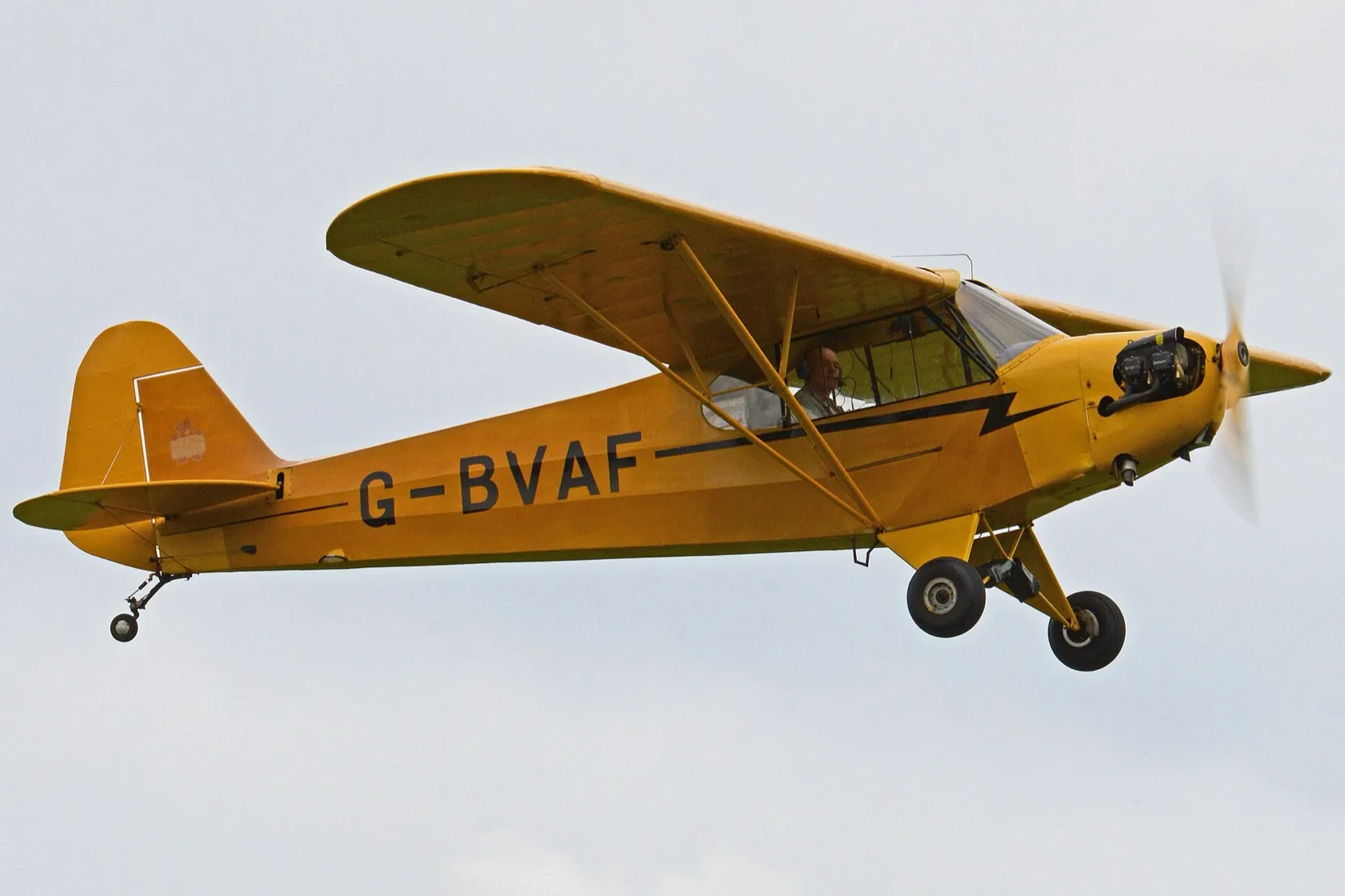
The Piper J-3 Cub (often written J3 Cub) is a yellow fabric taildragger from the 1930s and 40s, 65 hp Continental A-65, started by hand-swinging the prop. Most J-3s have no electrical system: no starter, no master switch, no breakers, often no radio. Fuel is one gravity-fed header tank ahead of the windscreen, and the gauge is a wire with a cork float poking up through the cowl. No flaps, so approaches are slips and power. Brakes are weak heel-operated expander-tube drums, so ground handling runs on rudder and airspeed. Two seats in tandem, solo from the rear for CG. Tailwheel students, vintage owners, and grass-strip pilots fly them, and anyone coming off a 172 has to unlearn most of what they know about starting and systems.
The Cub is what I send people to when they want to feel like they’re actually flying. I built this checklist around the classic no-electrics J-3 because that’s the one that trips up pilots coming off a 172: no master switch, no starter, a bent wire for a fuel gauge. Hand-propping stays thin here on purpose.
Normal procedures
The J-3 Cub preflight checklist runs in five walkaround segments (cabin, empennage, right wing to nose, nose and engine, left wing and fuselage), then before-start, hand-prop start, taxi, run-up, takeoff, climb, cruise, descent, before-landing, after-landing, shutdown, plus a J-3 / A-65 V-speed table. Three type habits drive it: read the cork-and-wire header tank at preflight and watch it in cruise, carb heat any time you pull power, and treat the hand-prop section as a conservative outline rather than instruction.
Emergency procedures
Memory items are bold. Engine failure on the takeoff roll, after takeoff, and in flight; engine fire; and a carburetor-icing abnormal, the one the A-65 is genuinely prone to at idle and low power. The electrical section applies only to Cubs retrofitted with an electrical system, since an unmodified airframe has nothing to fail. Training aid built from accepted practice, not an approved procedure.
Verify it against your POH
These vary by airframe and serial. Check them against your approved POH and weight and balance first:
- Electrical retrofit. With a starter/alternator STC, use that airframe’s own POH; the hand-prop and no-electrics flows here don’t apply.
- Stall speeds. Published Vs/Vso vary by source, roughly 30 kt vs 33 kt, likely different weights and mph-to-knot rounding.
- Solo seating. Rear seat is common practice for CG, not confirmed universal across serials, weights, and mods.
- Mixture. The A-65 has a mixture control, typically left full-rich at Cub altitudes. Whether you lean at all is a POH question.
- The two Vne regimes. A dive/glide limit of 122 mph / 106 kt, and a lower level-flight and climb CAS limit of 90 mph / 78 kt. Don’t conflate them.
- Brakes. Original expander-tube heel brakes are weak with parts-availability problems; some airframes carry disc-brake STCs. Know which you have.
Why not just print a static PDF?
- It's free with no caps — build, edit, save, and print as many as you want.
- You can add your own tail number and logo, so the checklist matches your airplane.
- Every page size is here — half-letter, A5, letter, and folding trifold or 2-up.
A PDF from the internet doesn't know your tail number, your panel, or your instructor's habits. Build your own in the time it takes to read this page — still free.
What's inside
- Preflight — Cabin & Documents
- Preflight — Empennage & Tail
- Preflight — Right Wing to Nose
- Preflight — Nose & Engine
- Preflight — Left Wing & Fuselage
- Before Start
- Engine Start — Hand-Propping
- Before Taxi & Taxi
- Run-up & Before Takeoff
- Takeoff
- Climb
- Cruise
- Descent
- Before Landing
- After Landing
- Shutdown & Securing
- V-Speeds (J-3, A-65 — typical)
- EmergencyEngine Failure on Takeoff Roll
- Engine Failure After Takeoff (Low Altitude)
- Engine Failure in Flight (Altitude Available)
- Engine Fire in Flight
- Electrical Fire / Failure
- Carburetor Icing (Abnormal)
Questions pilots ask
- Is there a printable Piper J-3 Cub emergency checklist here?
- Yes. The emergency section covers engine failure on the takeoff roll, engine failure after takeoff, engine failure in flight, engine fire, an electrical section that applies only to modified airframes, and a dedicated carburetor-icing flow — the abnormal the A-65 is genuinely prone to at idle and low power. On an unmodified J-3 there is no electrical system to fail, so that section defers to your airframe's own book. Verify every step against your POH.
- What speeds are in the Piper J-3 Cub checklist?
- The checklist carries a J-3 / A-65-typical table. Two things to confirm: published stall speeds vary between sources (roughly 30 vs 33 kt, likely from different weights and mph-to-knot rounding), and the type certificate distinguishes a dive/glide Vne (122 mph / 106 kt) from a lower level-flight and climb limit (90 mph / 78 kt) — do not conflate the two. Confirm both against your airframe's POH.
- Does this teach me how to hand-prop a Cub?
- No, and deliberately so. The preconditions come first and they are not optional: a qualified person at the controls with the brakes held, or the airplane tied down and chocked if no one is in it; the magneto switch verified off before anyone touches the prop; and both people briefed on the call-and-response before a hand goes near the blade. Technique only matters after all of that is true, and technique is a physical skill you learn in person from a current, qualified tailwheel/Cub instructor. The start section here is a conservative outline of that accepted practice, nothing more — do not attempt a hand-prop off a printed checklist.
- My J-3 has no fuel gauge I recognize — how do I check fuel?
- On a classic J-3 the only quantity indication is a wire with a cork float on the single header tank ahead of the windscreen; the wire sticks up through the cowl and you read the level by how far it protrudes. There is no wing-tank selector and no electric gauge. It checks the header tank at preflight and has you monitor the wire gauge in cruise — plan conservatively, because it is a coarse indication.
- There's no master switch — what do I do about "electrical failure"?
- Nothing, because an unmodified Piper Cub has no electrical system at all: no master switch, no starter, no bus, nothing to fail. The electrical section on this checklist applies only to Cubs retrofitted with an electrical system or to the Super Cub, and even then it defers to that airframe's own POH because switch and breaker layouts are not standardized.
Related aircraft
.jpg)
New to checklists? Read our guide to building an aircraft checklist →
Need the official numbers? Piper J-3 Cub POH & manuals →