Beechcraft Bonanza A36 Checklist
A free, printable Beechcraft Bonanza A36 checklist — 20 sections from Preflight Inspection to Landing Gear Will Not Extend, free to edit, sized for a kneeboard.
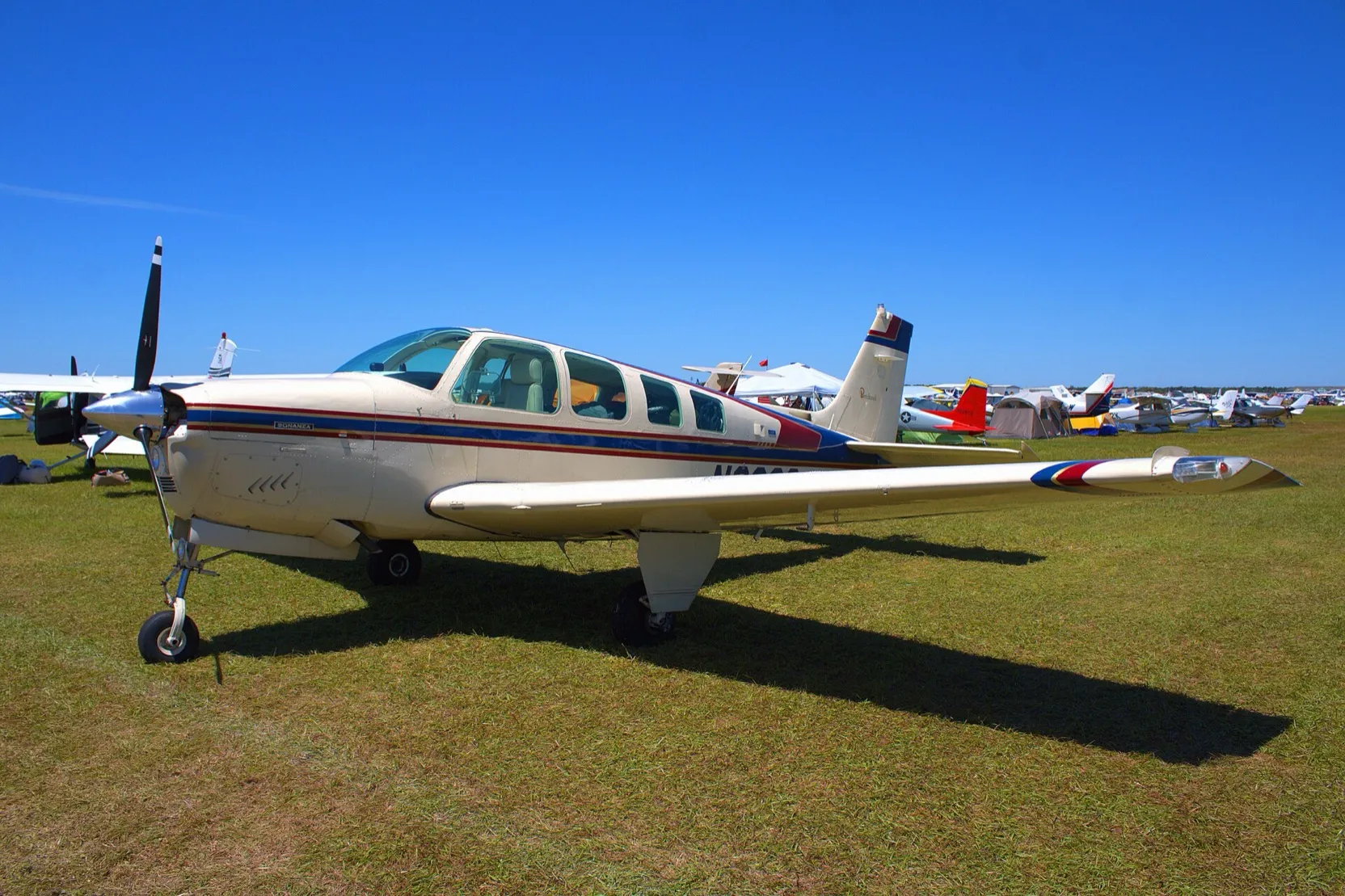
What the Beechcraft Bonanza A36 is
The A36 is the long-body, six-seat, straight-tail Bonanza, a fast retractable single in production for over fifty years. The fuselage stretches about ten inches forward of the wing compared with the V-tail V35, which buys a wider CG range and a loading envelope you do not have to fight. Its signature is the four-foot double cargo door on the right aft fuselage, latched independently of the cabin door. This checklist is the normally aspirated airplane: Continental IO-520 or IO-550, constant-speed prop, two-tank left/right fuel, injected, so no carb heat. Owner-pilots flying real cross-countries, and step-up pilots building complex time. The turbocharged A36TC/B36TC and glass-panel G36 are out of scope.
The A36 is the Bonanza I always wished I could afford to own, a six-seat traveler that still lands like a trainer once you respect the gear. I built the checklist around the IO-520/550 airplane, what most owners and renters fly. Print it, add your tail number, latch that cargo door, and fly your own POH numbers.
Normal procedures
Twelve flows, preflight through shutdown, plus an A36 V-speed table. GUMPS runs the pattern: gas, undercarriage, mixture, prop, switches, with gear down and three green at before-taxi, run-up, before-landing, and short final. A forgotten handle, not a failed gear motor, is how most Bonanzas end up gear-up. The aft cargo door is checked and latched separately at preflight, before start, and before takeoff, because it does not follow the cabin door and an unlatched one is a documented Bonanza event. No carb heat: the IO-520/550 is injected.
Emergency procedures
Memory items are in bold. Coverage: engine failure on the takeoff roll, after takeoff at low altitude, and in flight with a no-restart branch; engine fire; electrical fire or smoke; an alternator/electrical abnormal; and a gear that will not extend. Two caveats: the bold items are standard practice for retractable, injected singles, not one POH’s boxed list, and the manual gear-extension turn count is approximate. Walk both through with a CFI against your emergency section and the ABS Landing Gear Guide.
Verify it against your POH
Eight items vary by variant, serial, engine, and operator. Check each against your POH/AFM before you fly the checklist:
- Vy, Vx, Va, best glide. Blank on purpose, not guessed. Only Vso, Vfe, Vlo/Vle, and Vne were corroborated; the rest move with model year and engine (IO-520 vs IO-550).
- Boost/aux fuel pump. Off after takeoff, on before landing is standard for the type; the exact trigger in your POH was not verified.
- Alternate air. No carburetor on the IO-520/550, but induction icing still happens and alternate air is the fix. Activation guidance unverified.
- Which items are true memory items. The bold ones came from type-club and training material, not a POH’s boxed list.
- Manual gear extension. Hand crank between the front seats, dozens of turns. One source said roughly 50, not cross-confirmed. Get the real number before you need it.
- Fuel selector at shutdown. Operator preference, not a POH rule.
- Fuel drains. Two wing sumps plus a belly strainer is standard; some years and mods add quick-drains. Confirm for your serial.
- Hot start. Easy to flood a hot Continental. Follow your POH’s hot-start branch.
Why not just print a static PDF?
- It's free with no caps — build, edit, save, and print as many as you want.
- You can add your own tail number and logo, so the checklist matches your airplane.
- Every page size is here — half-letter, A5, letter, and folding trifold or 2-up.
A PDF from the internet doesn't know your tail number, your panel, or your instructor's habits. Build your own in the time it takes to read this page — still free.
What's inside
- Preflight Inspection
- Before Start
- Engine Start
- Before Taxi & Taxi
- Run-up & Before Takeoff
- Takeoff & Initial Climb
- Climb
- Cruise
- Descent
- Before Landing
- After Landing
- Shutdown & Securing
- V-Speeds (A36, typical)
- EmergencyEngine Failure on Takeoff Roll
- Engine Failure After Takeoff (Low Altitude)
- Engine Failure in Flight (Altitude Available)
- Engine Fire in Flight
- Electrical Fire / Smoke in Cockpit
- Alternator / Electrical Failure (Abnormal)
- Landing Gear Will Not Extend (Abnormal)
Questions pilots ask
- Is there a printable Beechcraft Bonanza A36 emergency checklist here?
- Yes. The emergency section covers engine failure on the takeoff roll, engine failure after takeoff, engine failure in flight with a no-restart branch, engine fire, electrical fire / smoke, an alternator/electrical abnormal, and a landing-gear-will-not-extend flow, with the memory items in bold. The bold memory items reflect standard practice for retractable fuel-injected singles rather than a line-by-line POH transcription, so verify them against your aircraft's emergency section.
- What speeds are in the Beechcraft Bonanza A36 checklist?
- The checklist carries an A36-representative table with Vso, Vfe, Vlo/Vle, and Vne corroborated in research. Vy, Vx, Va, and best-glide speed were left blank on purpose rather than guessed, because they vary meaningfully by model year and engine (IO-520 vs IO-550) — fill them from your POH performance section.
- Does this work for a V-tail Bonanza or a G36?
- Not directly. The V35 V-tail shares gear and engine families but has a different empennage, a tighter CG envelope, and no cargo door, so its loading and handling notes do not transfer. The glass-panel G36 flies the same airframe but its Garmin G1000 workflow needs its own checklist, and the turbocharged A36TC/B36TC add wastegate and manifold-pressure limits this template does not cover. This checklist is for the normally aspirated, steam-gauge A36.
- Why does the gear check show up so many times, and where's the carb heat?
- Because Bonanzas have a historically elevated gear-up landing rate, and it is almost always a forgotten handle rather than a mechanical failure. GUMPS — gas, undercarriage, mixture, prop, switches — is the mnemonic that catches it, and the gear-down three-green check repeats at before-taxi, run-up, before-landing, and short final for that reason. There is no carb-heat item because the IO-520/IO-550 is fuel-injected. The gear warning horn is tied to throttle position, so never silence it without confirming gear position.
- The cargo door — do I really need to check it separately?
- Yes. The A36's aft double cargo door is a distinguishing feature versus the V-tail models and latches independently of the main cabin door. A door left unlatched is a well-documented Bonanza-family event, so it is checked and latched separately at preflight, before start, and before takeoff.
Related aircraft
_(4-13-2024).jpg)
New to checklists? Read our guide to building an aircraft checklist →
Need the official numbers? Beechcraft Bonanza A36 POH & manuals →