Piper PA-28R Arrow Checklist
A free, printable Piper PA-28R Arrow checklist — 20 sections from Preflight Inspection to Landing Gear Malfunction, free to edit, sized for a kneeboard.
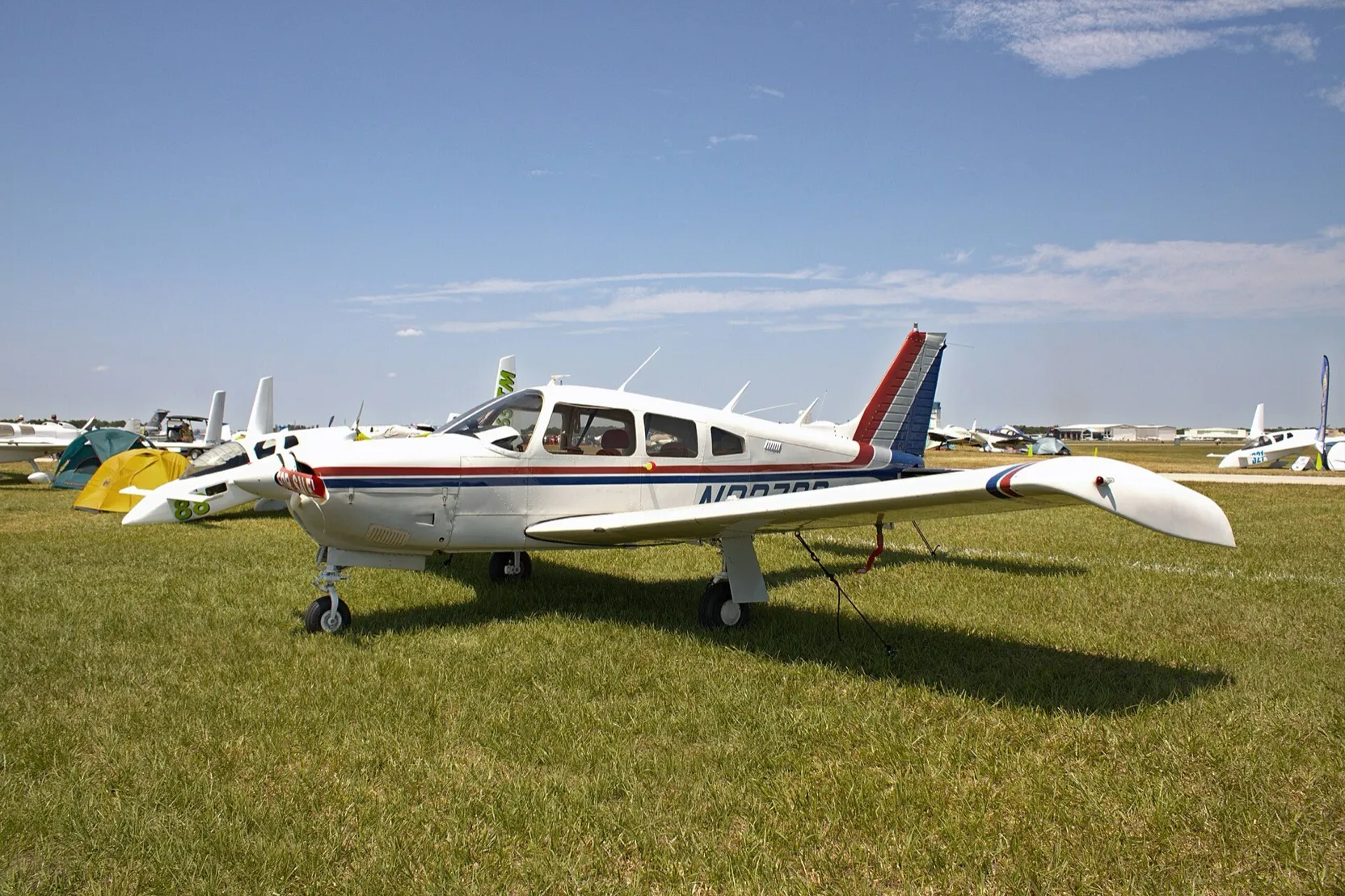
What the Piper PA-28R Arrow is
The PA-28R Arrow is the Cherokee whose gear comes up. Same low-wing PA-28 airframe, plus hydraulic retractable gear and a constant-speed prop, so it is what most of us rent for a complex endorsement or commercial time. Variants: the 180 hp PA-28R-180, the 200 hp Arrow II, the tapered-wing Arrow III (PA-28R-201, what this checklist covers), the T-tail Arrow IV, and the turbocharged Turbo Arrows. Arrow III with the fuel-injected Lycoming IO-360 is the common rental, so there is no carb-heat line here. Coming off an Archer or a 172 you pick up a prop lever, a gear handle you can never forget, and on many airframes an Automatic Gear Extension system that drops the gear whether you asked or not.
The Arrow is where a lot of us learned an airplane can bite you for forgetting one lever. I built this checklist around the normally aspirated Arrow III and put the gear-down, three-green check at every point in the pattern where somebody has landed one wheels-up. Print it, add your tail number, and fly the numbers in your own POH.
Normal procedures
Twelve flows, preflight through shutdown, plus an Arrow III V-speed table. The one that matters on this type is GUMPS: gas, undercarriage, mixture, prop, switches. Gear down and three green shows up at before-taxi, run-up, before-landing, and again on short final. A forgotten handle is the ordinary way pilots land an Arrow gear-up. Hot and cold start both differ from a carbureted Cherokee.
Emergency procedures
Memory items are in bold. Coverage: engine failure on the takeoff roll, after takeoff at low altitude, and in flight with a restart attempt; engine fire; electrical fire or smoke; an alternator/electrical abnormal; and a gear that will not confirm down-and-locked. Two gaps are on purpose: no turn-back to the runway, since that decision altitude is airport-, aircraft-, and training-specific, and AGE override flagged rather than assumed, since fitment varies by serial. These are POH-derived steps, not the AFM, so walk them through with a CFI.
Verify it against your POH
Nine items vary by variant, serial, and operator. Check each against your approved POH/AFM before you fly the checklist:
- Automatic Gear Extension. Fitment changed across production, so not every airframe has it. Confirm your serial, the floor-mounted override, and the amber advisory light before trusting any override step.
- Rotation speed. Sources ranged roughly 60–72 KIAS depending on flaps and gear position. Pull Vr for the config you fly.
- Electrical fire, vents. POH generations conflict on closing vents to starve the fire versus ventilating to clear smoke, so the checklist says “per POH” on purpose.
- Fuel selector at shutdown. Fuller tank versus off reads as operator policy, not a POH mandate.
- Run-up RPM and mag drop limits. Not verified from an official POH excerpt. Source the figures yourself.
- Cowl flaps. Vary by production year, and some Arrow IIIs do not have them.
- Turn-back after takeoff. Left out deliberately. Needs CFI sign-off if you add it.
- Short and soft field. No verified procedure included. Source separately for your model.
- V-speeds. Arrow III-representative. The Hershey-bar Arrow and Arrow II have different wings, tankage, and speeds that do not transfer.
Why not just print a static PDF?
- It's free with no caps — build, edit, save, and print as many as you want.
- You can add your own tail number and logo, so the checklist matches your airplane.
- Every page size is here — half-letter, A5, letter, and folding trifold or 2-up.
A PDF from the internet doesn't know your tail number, your panel, or your instructor's habits. Build your own in the time it takes to read this page — still free.
What's inside
- Preflight Inspection
- Before Start
- Engine Start
- Before Taxi & Taxi
- Run-up & Before Takeoff
- Takeoff & Initial Climb
- Climb
- Cruise
- Descent
- Before Landing
- After Landing
- Shutdown & Securing
- V-Speeds (Arrow III, typical)
- EmergencyEngine Failure on Takeoff Roll
- Engine Failure After Takeoff (Low Altitude)
- Engine Failure in Flight (Altitude Available)
- Engine Fire in Flight
- Electrical Fire / Smoke in Cockpit
- Alternator / Electrical Failure (Abnormal)
- Landing Gear Malfunction (Abnormal)
Questions pilots ask
- Is there a printable PA-28R Arrow emergency checklist here?
- Yes. The emergency section covers engine failure on the takeoff roll, engine failure after takeoff, engine failure in flight with a restart attempt, engine fire, electrical fire / smoke, an alternator/electrical abnormal, and a landing-gear-malfunction flow for a gear that won't confirm down-and-locked, with the memory items in bold. Verify every step against your POH — the turn-back-after-takeoff decision is deliberately left out and needs CFI sign-off if you add it.
- What speeds are in the PA-28R Arrow checklist?
- The checklist carries an Arrow III-representative V-speed table. Rotation speed (Vr) is left as a range rather than a single number because sources gave roughly 60–72 KIAS depending on flap setting and gear position — pull the figure for the exact config you fly from the POH. The earlier Hershey-bar Arrow and Arrow II have different wings and speeds that do not transfer.
- Does the Arrow really lower its own gear, and can I rely on that?
- Many Arrows have an Automatic Gear Extension system that senses airspeed and power and will extend the gear on its own if you leave the handle up and slow below the trigger point, with a floor-mounted override switch and an amber advisory light. But it is not fitted to every airframe, Piper de-emphasized it in later production, and it must never be treated as a substitute for your own gear-down check. Confirm whether your serial has it, and always verify three green yourself in the pattern.
- Why does the gear check show up so many times on this checklist?
- Because a forgotten gear handle is the most common way pilots land an Arrow gear-up. GUMPS — gas, undercarriage, mixture, prop, switches — is the mnemonic that catches it, and the gear-down, three-green check is repeated at before-taxi, run-up, before-landing, and again on short final on purpose. Those are the points where a real pilot has landed one wheels-up, usually while distracted by a busy pattern or a nonstandard approach. Redundancy on the one item that bites this type is the whole reason the checklist is laid out this way.
- Where's the carb heat? I don't see it on the checklist.
- There isn't one. The normally aspirated Arrow III's Lycoming IO-360 is fuel-injected, so there is no carburetor and no carb-heat control. Pilots coming from a carbureted Cherokee or 172 should note the hot- and cold-start technique differs too. If you fly a Turbo Arrow, its Continental TSIO-360 adds wastegate and manifold-pressure limits this checklist does not cover.
Related aircraft
_(4-10-2024).jpg)
New to checklists? Read our guide to building an aircraft checklist →
Need the official numbers? Piper PA-28R Arrow POH & manuals →