Cessna 206 Stationair Checklist
A free, printable Cessna 206 Stationair checklist — 22 sections from Preflight Inspection to Turbocharger Failure / Overboost, free to edit, sized for a kneeboard.
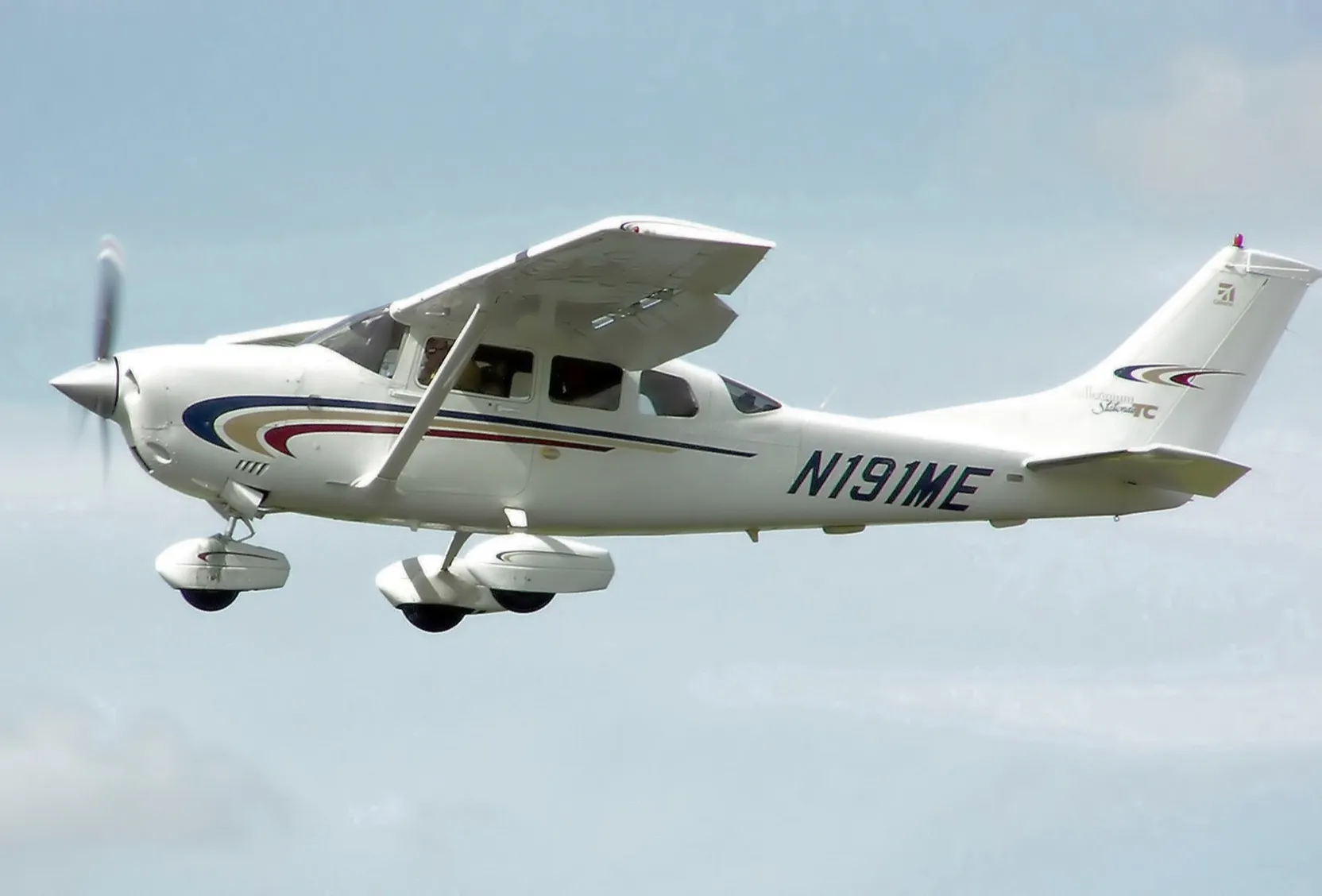
What the Cessna 206 Stationair is
Six seats, high wing, fixed gear, and the heavy hauler of Cessna’s piston line. Where the 172 trains and the 182 travels, the 206 works: short strips, skydive clubs, floats, freight. Cargo loads through the clamshell door on the right rear, and that door is wired into the flap system — no flaps unless the front cargo door is fully latched. This checklist is built on the turbocharged T206H NAV III: fuel-injected 310 hp Lycoming TIO-540, constant-speed prop, G1000, GFC 700. Turbo means leaning by turbine inlet temperature (TIT) instead of EGT, plus a turbocharger failure / overboost abnormal a normally-aspirated airplane doesn’t have. The badge also covers the carbureted U206G/P206 classics and the normally-aspirated 206H; the numbers don’t carry across.
I fly a 172, not a 206, so I built this from the T206H POH rather than from the seat of my pants. What a generic Cessna checklist would flatten: TIT leaning, the cargo-door flap interlock, that third drain under the nose. Fly it against your own POH and tell me if a step reads wrong.
Normal procedures
Preflight through shutdown, with short/soft-field takeoff, a balked-landing note, and a T206H V-speed table. The utility habits sit where they happen: three fuel drains (a sump under each wing tank plus the gascolator under the nose cowl, not two per tank), the cargo-door / flap interlock in the preflight and run-up, manual cowl flaps in every phase, the fuel selector on BOTH aloft but a single tank when parked. Weight and balance every load, since useful load swings with year and equipment.
Emergency procedures
Memory items are bold: engine failure on the takeoff roll and right after takeoff, engine failure in flight with a restart attempt, forced landing / ditching with the cargo-door egress sequence (front door fully open, then release and force the aft door), engine fire, electrical fire, alternator failure, and the turbo-only turbocharger failure / overboost flow. Training aid built from POH-derived steps, not the AFM.
Verify it against your POH
Things that vary by variant, engine, and serial:
- Which 206 you fly. Carbureted U206/P206 airframes have carb-heat items this checklist omits and different speeds; a normally-aspirated 206H leans by EGT/fuel flow and drops every turbo item.
- Straight or amphibious floats. It’s a common floatplane, but water items aren’t here; they live in the float supplement to your POH.
- Minimum oil quantity. My source POH read 6 quarts minimum; reconfirm for your serial and engine variant.
- Magneto drop and differential limits. The run-up check exists; re-verify the numbers for your engine and serial.
- 85 / 75 KIAS after engine failure on takeoff. Read from the T206H POH. Check the non-turbo book instead of assuming a match.
- Short-field and balked-landing distances. Not on the checklist. Pull the performance section from your POH.
Why not just print a static PDF?
- It's free with no caps — build, edit, save, and print as many as you want.
- You can add your own tail number and logo, so the checklist matches your airplane.
- Every page size is here — half-letter, A5, letter, and folding trifold or 2-up.
A PDF from the internet doesn't know your tail number, your panel, or your instructor's habits. Build your own in the time it takes to read this page — still free.
What's inside
- Preflight Inspection
- Before Start
- Engine Start (Fuel-Injected)
- Before Taxi & Taxi
- Run-up & Before Takeoff
- Takeoff
- Climb
- Cruise
- Descent
- Before Landing
- Landing
- After Landing
- Shutdown & Securing
- V-Speeds (T206H, typical)
- EmergencyEngine Failure on Takeoff Roll
- Engine Failure Immediately After Takeoff
- Engine Failure in Flight (Restart Attempt)
- Forced Landing / Ditching (No Power)
- Engine Fire in Flight
- Electrical Fire in Flight
- Alternator / Electrical Failure (Abnormal)
- Turbocharger Failure / Overboost (Abnormal — Turbo Only)
Questions pilots ask
- Is there a printable Cessna 206 emergency checklist here?
- Yes. The emergency section covers engine failure on the takeoff roll, engine failure immediately after takeoff, engine failure in flight with a restart attempt, a forced-landing / ditching flow, engine fire, electrical fire, an alternator/electrical abnormal, and a turbocharger-failure / overboost abnormal specific to the turbo H-model, with the memory items in bold. Verify every step against your aircraft's POH.
- What speeds are in the Cessna 206 checklist?
- The checklist carries a T206H-typical V-speed table, including engine-failure-after-takeoff speeds (about 85 / 75 KIAS) read from the T206H POH specifically. A normally-aspirated 206H may differ slightly with its different weight and drag, so check the non-turbo POH directly rather than assuming they match.
- I fly a normally-aspirated 206, not the turbo — can I use this?
- Not as-is. This template centers on the turbocharged T206H, so it leans by turbine inlet temperature (TIT) and includes a turbocharger-failure flow. On a normally-aspirated 206H/U206 you lean by EGT/fuel-flow instead and those turbo items don't apply. Start from your model's POH and drop the turbo-specific steps.
- Can a Cessna 206 land on floats?
- Yes, and it is one of the more common float conversions out there, on straight floats and on amphibious floats with retractable wheels. What that changes is the checklist rather than the airplane: water taxi and step taxi, glassy-water technique, the gear-position discipline an amphibian demands, and docking and mooring items — none of which are on this checklist. Those flows live in the float supplement to your POH, and older airframes (the carbureted U206G and P206) differ again from the T206H this template is built on, so verify against the specific airplane's POH.
- What is the useful load of a Cessna 206?
- Roughly 1,300 to 1,400 lb on a typical U206G, and that is a ballpark, not a number to load against. Useful load on this airframe swings with serial, engine, avionics, interior, floats, and every mod in the logbook, which is why a six-seat 206 can still run out of payload before it runs out of seats. Weigh your airplane, or at minimum work from the current weight-and-balance sheet for your N-number, and run the numbers for every load.
- Why does the cargo door show up in the flap and emergency steps?
- Because the 206's clamshell cargo door is wired into the flap system — the flaps won't lower unless the front cargo door is fully latched, so it belongs in the preflight and run-up. The same door is also a documented emergency exit: open the front cargo door fully, then release and force the aft door. That's why "unlatch the door" appears in the forced-landing flow.
- How many fuel drains does the 206 have?
- Three on this airframe: one sump under each wing tank plus a separate fuel strainer / gascolator drain under the nose cowling — not two per tank as on some other singles. Confirm the exact drain points for your N-number; long-range or modified aircraft can differ.
Related aircraft

New to checklists? Read our guide to building an aircraft checklist →
Need the official numbers? Cessna 206 Stationair POH & manuals →